


Choosing where to study can shape far more than the next few years. It can influence your career path, your friendships, your confidence, and the kind of life you imagine for yourself. For many international students, Canada stands out because it offers strong academic options, multicultural communities, and a student experience that can feel both ambitious and welcoming.
Starting studies in Canada is a big decision, but it becomes much easier when you break it into clear steps: choose the right program, prepare a strong application, understand study permit requirements, and plan where you will live.
A student from India studying in Ontario described the first semester this way:
“The first month was overwhelming. I had to learn the transit system, manage groceries, and speak up in class. By midterm season, I realized I was becoming more independent every week.”
That sense of growth is one of the biggest reasons students choose to study abroad.
Choose the right program and institution
The “best” school is not always the most famous one. The better question is whether the program fits your goals, budget, learning style, and future plans.
Start with the program outcome. Ask yourself what you want the credential to help you do. For example, a student interested in software development may compare a computer science degree, a college diploma in programming, and a graduate certificate in data analytics. Each path can lead somewhere different.
Look closely at:
| What to compare | Why it matters |
|---|---|
| Program length | Affects tuition, living costs, and study permit planning |
| Admission requirements | Helps you avoid applying to programs where you are not eligible |
| Co-op or placement options | Can help you gain Canadian work experience |
| Campus location | Impacts rent, transit, climate, and job access |
| Total cost | Tuition is only one part of the budget |
| Institution status | International students usually need a designated learning institution |
Do not choose based only on rankings. A smaller college with strong employer connections may be better for one student than a large university. A campus in a smaller city may also offer lower rent and a quieter study environment.
Understand the application process early
Application timelines vary by institution and program. Some competitive programs close early, while others accept students until seats fill. Give yourself more time than you think you need.
A typical application may include:
- Academic transcripts
- Proof of English or French language ability
- A passport copy
- A statement of purpose or letter of intent
- Reference letters, if required
- A portfolio for creative programs
- Application fees
Read the instructions for each institution carefully. Small mistakes can slow things down. For example, some schools require official transcripts sent directly from your previous institution. Others may accept uploaded copies during the first stage.
Your statement of purpose should be specific. Avoid vague lines about wanting a “better future.” Explain why the program fits your background, why Canada makes sense for your goals, and how the credential connects to your next step.
One student in British Columbia shared a helpful lesson:
“I applied to three schools with the same generic statement and got no response. When I rewrote it to explain why each program fit my animation portfolio, I received an offer.”
Personal detail often makes an application stronger.
Navigate study permit and visa requirements carefully
For most international students, admission is only one step. You may also need a Canadian study permit before you begin your program. Requirements can change, so always use the official Government of Canada immigration website as your main source.
In general, students may need:
- A letter of acceptance from an eligible institution
- Proof of identity
- Proof of financial support
- Supporting documents requested for their country or situation
- Biometrics, a medical exam, or police certificates in some cases
- A provincial or territorial attestation letter, if required under current rules
This section is for general information only and is not legal advice. If your situation is complex, consider speaking with a qualified immigration professional.
Be honest and consistent in your application. Your study plan, financial documents, and program choice should make sense together. If you studied business before and now want to study nursing, explain the change clearly.
Find accommodation before the rush
Housing can be one of the biggest challenges for new students. Start looking as soon as you accept your offer, especially if you plan to study in a large city.
Common options include:
- On-campus residence Often convenient for first-year students, with easier access to classes and campus services.
- Shared rental housing Usually cheaper than living alone, but it requires careful screening of roommates and lease terms.
- Homestay Can be helpful for students who want a family setting and local support.
- Temporary housing Useful for the first few weeks while you visit rentals in person.
Before signing anything, check what is included. Ask about utilities, internet, laundry, furniture, transit access, and lease length. Be cautious if a landlord asks for unusual payment methods, refuses a viewing, or pressures you to send money quickly.
Settling in also takes practical planning. In your first week, focus on basics:
- Get a local phone plan
- Learn your transit route
- Open a bank account if needed
- Attend orientation
- Register for health coverage or student insurance
- Find nearby grocery stores and pharmacies
- Save emergency contacts on your phone
Small wins matter. The first successful bus ride to campus or first home-cooked meal can make a new country feel less intimidating.
Your next step begins with one clear plan
Starting Studies in Canada: A Practical Guide to Programs, Visas, and Student Life.
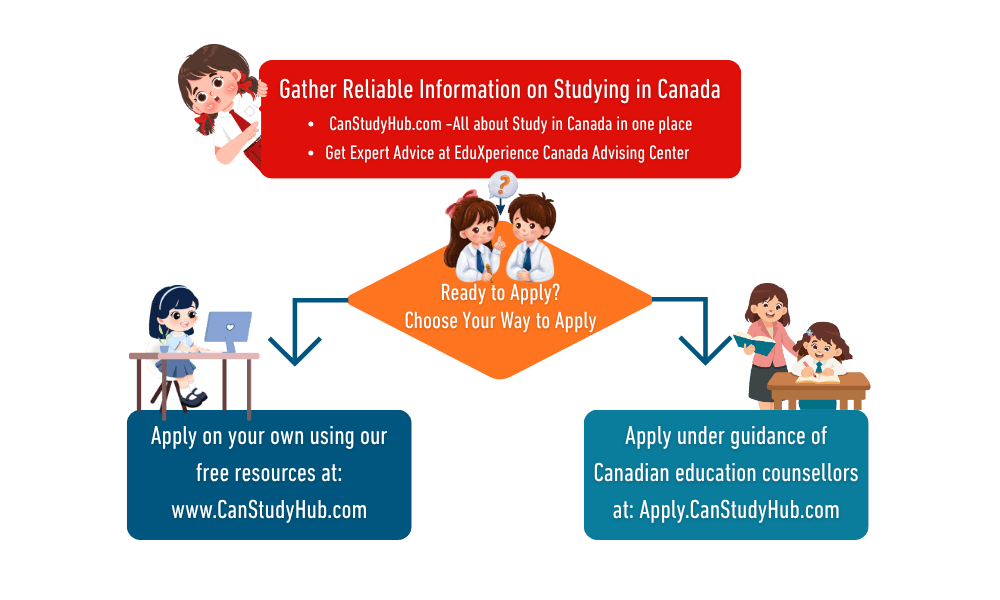
Studying in Canada is a major life decision, but it does not have to feel overwhelming. Start with a program that fits your goals, apply early, follow official study permit guidance, and arrange housing before the last minute. Get personalized guidance from Canadian education counselors at Apply.CanStudyHub.com.
The students who adjust best are not always the ones who know everything before they arrive. They are the ones who ask questions, stay organized, and take each step seriously. With preparation and patience, a new campus in Canada can become more than a place to study. It can become the place where your next chapter begins.
Have Questions?
Book a FREE consultation now and get started: https://calendly.com/eduxperience-info/consultation
or
WhatsApp +1 (416) 987 34 24 | Email study@eduxperience.com
Best Regards,
EduXperience Associates Canada | CanStudyHub Team